




130 Fulton Street, Suite 9A
New York City, NY
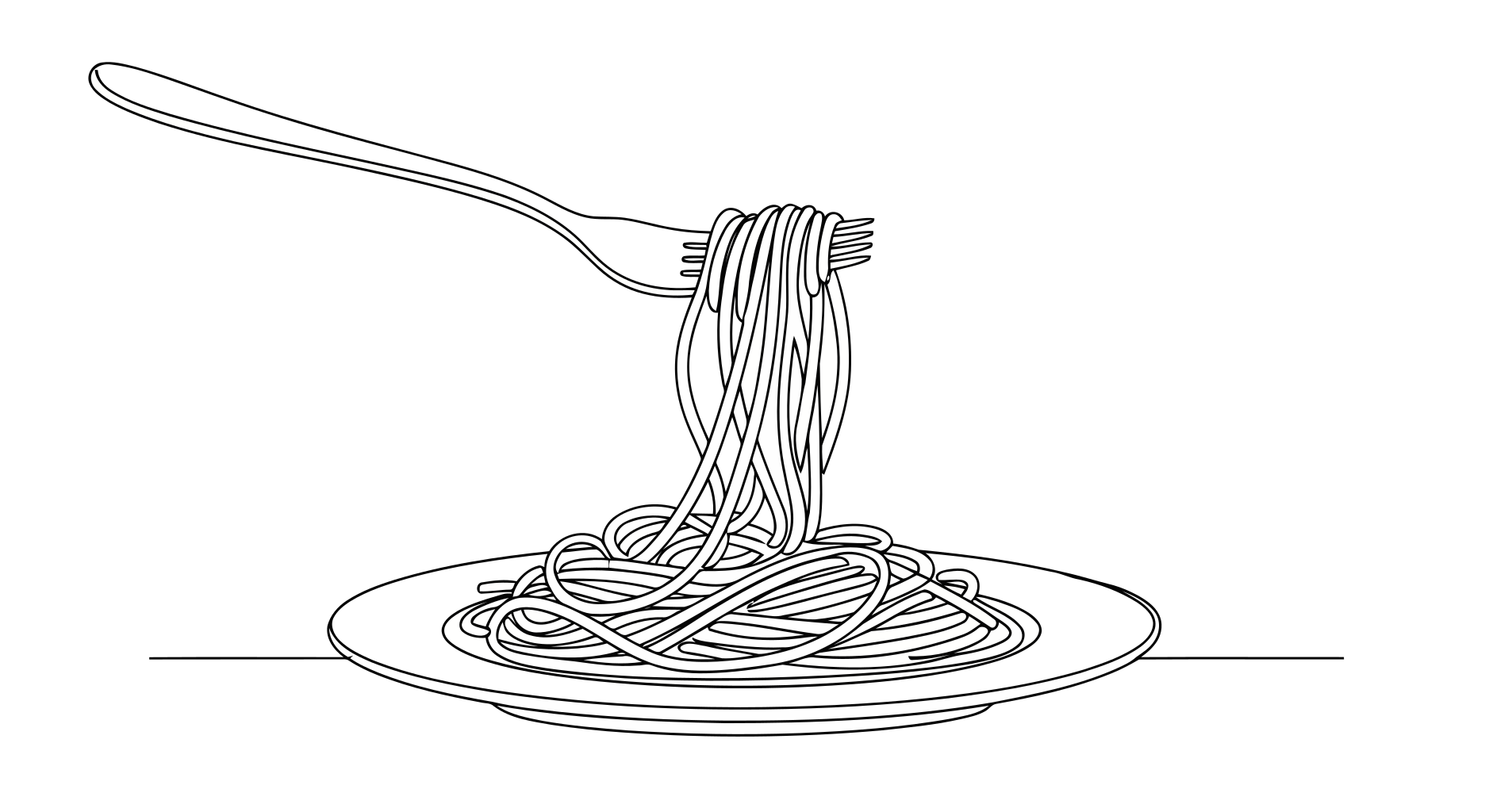
When my daughter, Claire, first encountered spaghetti, eating it was the furthest thing from her mind. She buried her face in it, hurled it onto the floor, and threw it up in the air. Peals of ecstatic laughter ensued. I laughed, too, and I watched delightedly as she, with both hands, tried to coax errant slippery strands into her mouth. I helped. I picked up the tossed spaghetti, wiped up the sauce spills, cheered her on, and in short, had fun. We played. Some time went by, and the next spaghetti encounter went much like the first. As did a couple more. It became evident that Claire had to learn to eat spaghetti and not just play with it, and that it was my job to teach her. It occurred to me around this time that if I ever wrote a book on child development its title would be "How to Civilize Children Without Breaking Their Spirit." The challenge was to teach Claire how to eat spaghetti while also enjoying the process of discovery.
The breakout of Artificial Intelligence prompts us to privilege getting the right answer over any non-linear benefit of the creative process, such as having associations and following them. It is also the latest example of how technology can supplant interpersonal connection and contribute to an increasingly alienated populace. The spaghetti problem has become a ubiquitous challenge across numerous areas of engagement.
Alienation is one of the most common issues patients express coming into my practice, and one of the most common causes is a lack of related human contact. Not feeling connected and not feeling seen are predictable harbingers of clinical depression, dissociation, and physical illness.
It is not news that an increase in the use of technology has resulted in a decrease in human interaction. We are collectively glued to our smartphones and laptops from which we get diluted simulacrums of what it means to be human. The communities we used to have have gone online and are communities in name only. We are eager to get to the end of things and eschew whatever gets in the way of that goal. Social media delivers distractions from discovery, increasing our need to click and swipe and get. We don't read as much as we used to, our attention spans are shot and walking down the street we hold our phones much more frequently than we hold each other's hands.
AI is the newest, hottest tech thing around, and with reason. It can give us the answers to many of our most pressing questions, often in seconds. Its most beneficial use is in quantitative fields such as engineering, medicine and science where actually getting a best answer is crucial. But in other areas, where thinking and feeling for oneself produces associations and connections that connect us to both the project at hand and to one another, an undisciplined use of AI threatens to make us impulsive, narcissistic, shallow, and unwise.
Play has been recognized as an essential aspect of personality development, as well as an indication of psychic health. It's the capacity to consider at least two disparate realms of interest at the same time and toggle between them, without succumbing to the siren song of certainty. Play seems less practical in that it has no linear goals, per se, other than to keep playing, and yet it is often in the process of play that the most desirable outcomes are realized. If I had instructed Claire on how to eat spaghetti on her first encounter with it, and dispensed with play, she may have acquired that skill earlier than she did, but at what cost?
I asked AI how to eat spaghetti. This is a precis of what it said:
Gather Strands
Twirl for Containment
Create a Bite-Sized Portion
Eat Without Slurping
Eat without slurping? What fun is that?
Nicholas Samstag, Ph.D. is a clinical psychologist and psychoanalyst in private practice in New York City, where he has worked for more than twenty years with high-functioning adults. He practices at 130 Fulton Street.
